

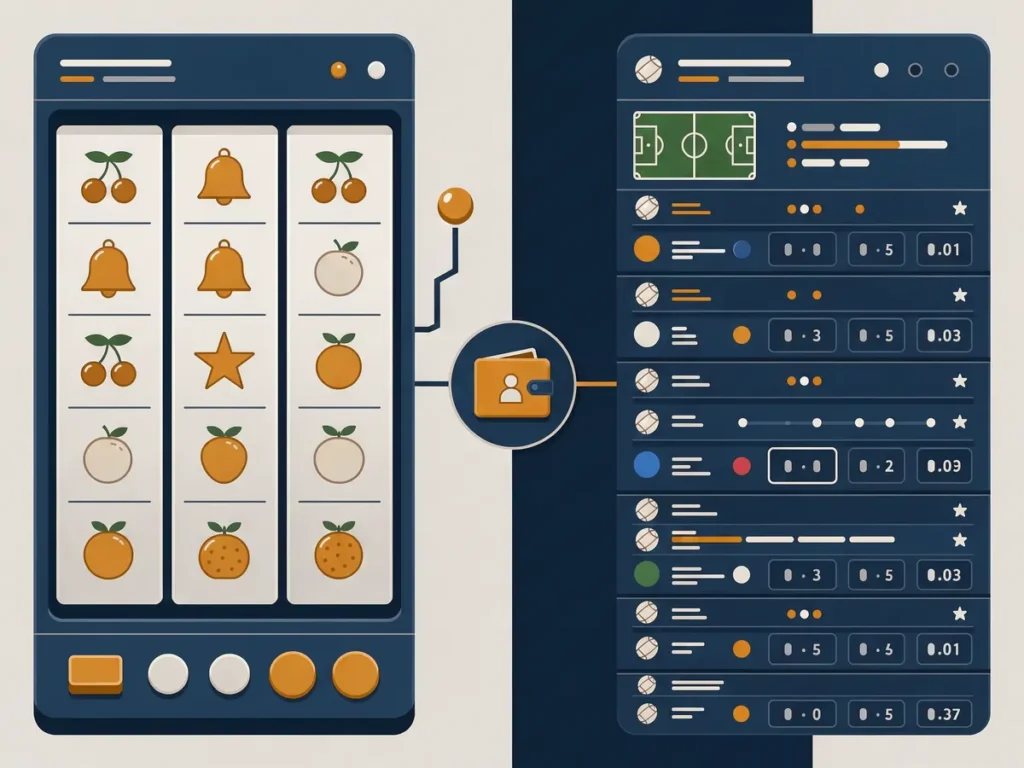
What the Wildz sports betting expansion actually is
The Wildz sports betting expansion is a platform partnership: Wildz Group, an online casino-first business, added a sportsbook vertical in 2024 using Altenar as its betting platform provider rather than building odds and trading capability in-house. That one line covers the decision, and it hides almost everything interesting about it.
Because “added a sportsbook” can mean three very different things, and the gap between them is where operators lose money. You can buy a standard turnkey product and bolt it on. You can commission a tailored build on someone else’s platform. Or you can hire traders, buy data feeds and own the risk yourself. Wildz took the middle road, and the announcement is explicit that the implementation was deliberately not off-the-shelf.
Wildz Group as a casino-first brand, and what that label leaves out
Wildz Group is described in the announcement as an online casino-first operator, meaning its acquisition, retention and product identity were built around casino content before any betting vertical existed. That positioning is the whole premise of the case study: the stated priority throughout the rollout was to scale without compromising the existing player experience.
Beyond that, be careful. The announcement does not set out the group’s corporate structure, its licensing footprint, its brand portfolio or absolute player numbers, and the involvement of dedicated Nordic trading specialists implies a Nordic-facing audience without confirming which markets hold which licences. If you are writing competitive intelligence off this, verify entity and licence detail against the relevant regulator registers rather than inferring it. The source is a press release, so treat the framing as the operator’s own.
What Altenar’s sportsbook platform brings
Altenar is a sportsbook platform provider, the B2B layer that supplies the betting product an operator fronts under its own brand. For Wildz, the deployment included a Custom Bet of the Day, Bet Builder, cash-out, daily streaming and tailored bet boosts, with dedicated Nordic specialists supplying regional trading expertise aligned to local preferences and sporting competitions.
Read that feature list as a statement about where the real work sits. Bet Builder and cash-out are table stakes for a modern sportsbook; a player arriving from a competitor notices their absence instantly. The regional trading input matters more, because odds compiled for a generic European audience will price the wrong competitions for a Nordic player base. Altenar’s structured onboarding is credited with keeping the integration manageable, which in practice is the difference between a launch that slips two quarters and one that doesn’t.
Build, buy, or tailor: three routes into sports betting
There is no neutral option here. Each route trades control against time and fixed cost, and the correct answer depends on how much of your margin you can afford to put at risk while you learn.
| Route | What you control | Main trade-off | Best fit |
|---|---|---|---|
| In-house build | Trading, pricing, risk, roadmap | Highest fixed cost and longest time to launch | Large multi-vertical operators with existing trading teams |
| Standard turnkey / white-label | Branding and marketing only | Fast, but the product looks like everyone else’s | Operators testing demand cheaply |
| Tailored platform partnership | Front-end experience, feature mix, regional trading input | Dependency on the provider’s roadmap and release cycle | Casino-first brands with a player base worth protecting |
Wildz sits in the third row. That is the defensible choice for a brand whose equity is its casino experience: a generic betting skin dropped next to a distinctive casino lobby reads as a different company, and churns the players you were trying to cross-sell. What it costs you is independence. When a provider deprioritises a market or a feature, you wait.
What the rollout confirms, and what it doesn’t
Confirmed: the vertical launched in 2024, Altenar is the platform provider, the brief was a tailored rather than standard product, the feature set is the one listed above, and Nordic trading specialists were assigned to the account. The stated commercial rationale is acquiring new customers and increasing engagement without losing what the casino brand already does well. Performance data came with it too: sportsbook margins consistently hitting double digits, and unique active players up by more than 100% within two months.
Not confirmed, and worth resisting the urge to estimate: how long integration took, what the commercial terms are, how many markets the sportsbook is live in, whether betting and casino share a single wallet and account, what handle sits behind those double-digit margins, and how much of the player growth came from cross-sell rather than fresh acquisition. Any figure beyond the two the operator published is somebody’s guess, including the plausible-sounding ones.
Why casino operators keep adding a sportsbook
Revenue concentration is the honest reason. A casino-only operator is exposed to a single product cycle, a single set of game suppliers and, increasingly, market-by-market restrictions aimed squarely at slots. Sports betting diversifies that exposure and brings a different acquisition rhythm, built around fixtures and tournaments rather than content releases.
The cross-sell logic runs both ways, and most operators overrate one direction. Betting-led players migrating into casino is a well-worn pattern because the sportsbook supplies cheap, event-driven traffic. Pushing an existing casino audience into sports is harder: the two behaviours are not the same habit, and a slots player does not automatically become a football bettor because a tab appeared in the menu. If your business case rests on casino-to-sports conversion, model it conservatively and be willing to be wrong.
Where this gets expensive if you get it wrong
Three costs are easy to underestimate. Licensing and compliance overhead multiplies per market, because a casino licence rarely covers betting, and each jurisdiction adds its own product rules, reporting and advertising constraints. Margins behave differently: casino revenue derives from a fixed house edge and is predictable at volume, while sportsbook margin depends on trading quality, bet mix and short-term results, and a bad run of favourites can turn a profitable month negative. Cash-out and bet boosts, both in the Wildz deployment, are margin-sensitive features that reward good risk management and punish sloppy configuration.
The third cost is the product one, and it is the reason the “tailored, not standard” framing in this announcement deserves attention. Bolt a sportsbook onto a casino-first brand carelessly and you degrade the experience that was working. Navigation gets heavier, promotions compete for the same inbox, and the player who came for one thing now wades through two.
What the announcement does report, double-digit margins and a doubling of unique active players inside two months, is operator-reported and arrives without the handle or cross-sell breakdown that would let you judge how durable it is. The rollout is documented, the strategy is legible, the full picture is not. If you are building the same case internally, the useful part of the Wildz Group sportsbook expansion with Altenar is the sequencing: decide what in your casino product is untouchable, then choose the integration route that protects it, rather than choosing a provider first and discovering the constraint later.