

Five points, not twenty: what the Budget actually set
The UK gambling tax rise confirmed in the Budget is five percentage points, not twenty. Machine Games Duty on higher-stakes machines goes from 20% to 25%, announced by Chancellor John Healey on 28 October 2026, against months of speculation that the rate would be doubled to 40%.
Healey framed it narrowly. He told the Commons he was “raising machine games duty from 20% to 25% for higher-stakes machines, while protecting pubs and seaside arcades”, leaving the lower-stakes band untouched. The proceeds, he said, would fund support for high streets, including business rate relief for high street businesses.
Then the sting in the tail: Adult Gaming Centres and vape shops are carved out of that rates relief. So the duty paid on higher-stakes machines helps fund a relief package that the venues housing many of those machines cannot claim.
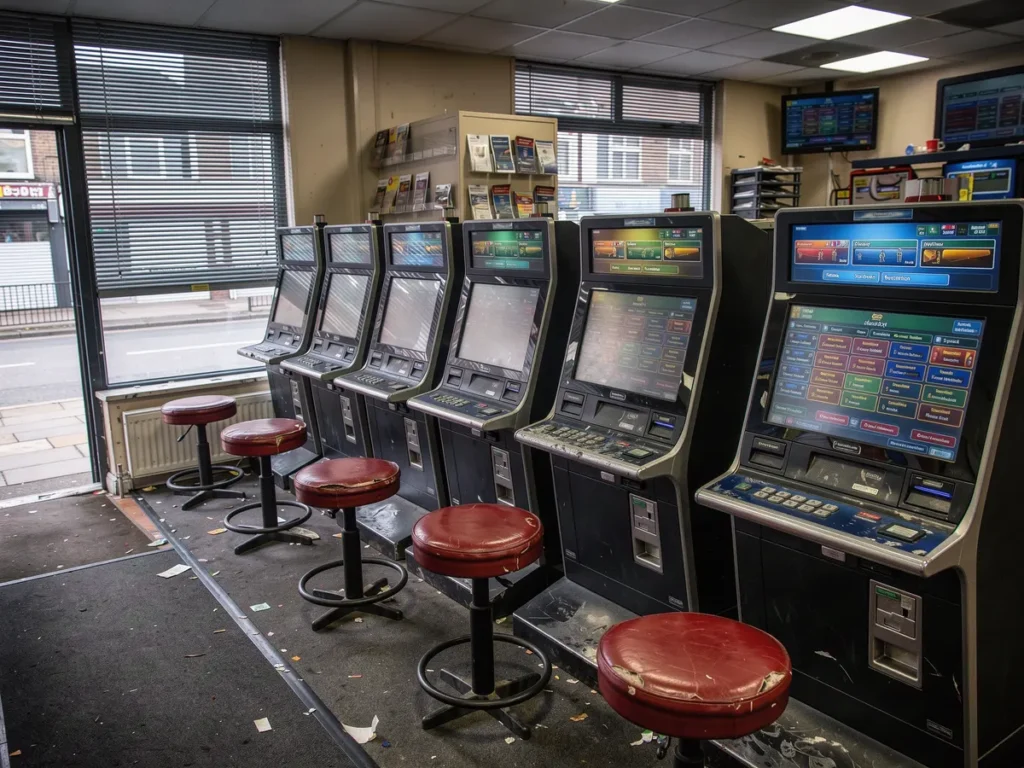
Machine Games Duty is levied on net takings from gaming machines in betting shops, arcades, bingo halls and casinos: stakes in, minus winnings paid out. It is not a tax on turnover and it is not a tax on profit after costs. It comes off gross machine income before a single bill is paid.
Why the industry called it a relief, and why that reading is only half right
The relief is real but it is relief from a worse scenario, not from pressure. Everyone in the sector is comparing 25% to 40% when the comparison that matters at venue level is 25% against 20%.
Greg Knight, managing director of retail operator JenningsBet, put it to iGB before the Budget in terms anyone who has flown out of Gatwick will recognise: “It’s a bit like when you’re waiting at an airport and they say you’ve got a three-hour delay, then they revise it to half an hour, and everyone cheers.” His verdict on a five-point rise: “I certainly don’t think it’s a win. It could be an awful lot worse, couldn’t it, but I’m not celebrating because at the end of the day it’s still going to be a big drain on the industry.”
Run the arithmetic and his caution makes sense. At 20% duty, an operator retains 80p of every £1 of machine net take. At 25%, it retains 75p. That is not a 5% hit to machine income, it is a 6.25% cut in what the machine actually contributes to the venue. The feared 40% rate would have cut retained machine income by a quarter.
| MGD rate on higher-stakes machines | Retained per £1 of machine net take | Change in retained machine income vs 20% |
|---|---|---|
| 20% (previous) | 80p | — |
| 25% (confirmed) | 75p | −6.25% |
| 40% (feared) | 60p | −25% |
A 6.25% reduction in one income line sounds survivable. It is survivable at a site with headroom. The condition almost nobody checked is how little headroom the marginal estate has left.
The condition that changes the answer: how thin venue margins already are
On a thin-margin site, a five-point duty rise is the difference between trading and closing. Sarah Calakovic, regional manager at Buzz Bingo in Kent, told the BBC that a five-point MGD increase would push around 40% of the estate into loss-making territory, and she was clear about why: bingo is the main income source, but gaming machines are the “secondary source of income” that carries the fixed costs.
That is the mechanism. In bingo halls, betting shops and arcades, machine income is frequently the line that covers rent, rates, staffing and energy once the core product has broken roughly even. Take 6.25% off that line and a site with a few thousand pounds of annual headroom no longer has any. Knight expects to close a “handful” of stores on the back of the rise.
Rank CEO Richard Harris made the same argument in a trading update before the decision: “any increase to machine games duty will increase costs, reduce venue viability, lead to venue closures and job losses, reduce tax receipts and halt investment.” The second-order point there is the one Treasury modelling tends to underweight. A duty rise applied to a shrinking number of machines in a shrinking number of venues does not raise the revenue the headline rate implies.
Grainne Hurst, CEO of the Betting and Gaming Council, framed it as cumulative rather than isolated: “Any further tax increase would heap more pressure on an industry already facing substantial tax rises, threatening jobs, high streets and vital funding for British racing.”
The 40% figure did not come from nowhere
The doubling scenario originated in policy advocacy, not in a leak. The Social Market Foundation, a think tank, had argued for a substantial MGD increase on two grounds at once: curbing gambling harm and raising money for the public finances. Machines in betting shops and arcades are high-intensity products, which makes them an obvious target when a government wants a levy that reads as both fiscal and protective.
Once a number like 40% is in circulation, it sets the frame. The sector spent months arguing against a figure that was never confirmed, and when the actual rate landed at 25% the instinct across the industry was to treat it as a concession. It was partly a concession. It was also an anchoring exercise, and the final rate still raises the cost of every higher-stakes machine on every UK high street.
Certainty was the ask, and it is still only half delivered
Several operators were not primarily lobbying on the rate. They were lobbying for a settled rate. Paul Willcock, CEO of Genting Casinos UK, told a panel event earlier in October that investment in the UK market turned on one condition: “If we can get some relaxation or at least certainty on that, then investment will flow.” Harris said the same thing from the other direction, that uncertainty over future gambling tax policy had already halted further investment at Rank.
That is the part of this story worth watching. A known 25% is more useful to a capital allocation committee than a rumoured 20-to-40% range, and the Budget has removed that range. What it has not done is establish whether 25% is a ceiling or a waypoint. The SMF case for a higher rate has not been withdrawn, the harm argument has not gone away, and nothing in the announcement commits a future Chancellor to anything.
So the practical work now is unglamorous: re-underwrite every marginal site on 75p rather than 80p, decide which leases to let run off, and work out whether an Adult Gaming Centre estate can absorb a duty rise and exclusion from high street rates relief at the same time. For players, the visible consequences will be fewer machines in fewer venues rather than anything on the screen. Anyone who uses those machines should still be setting deposit, loss and time limits, and operators are obliged to provide them whatever the duty rate happens to be.
Nobody in the sector is treating 25% as the end of the argument. They are treating it as the number they now have to plan around until the next Budget says otherwise.