

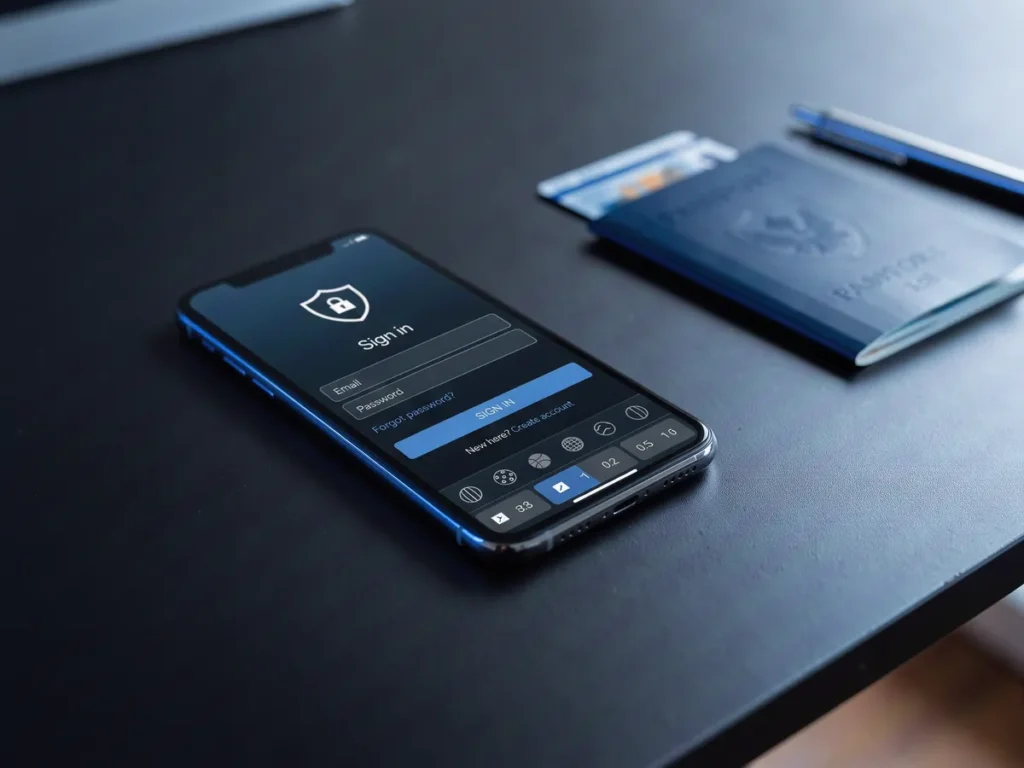
Passing identity checks does not make a betting account theft-proof. Verification confirms that a document existed and matched a face at one moment, usually the moment you signed up. It says nothing about who controls your password eighteen months later. That gap is where almost all gambling identity theft lives, and it is the gap Spain’s regulator has now moved to narrow, with the DGOJ introducing measures to combat identity theft in the licensed online market, as reported by SBC News.
The standard advice that follows a story like this is sound: use licensed operators, complete your verification, take the checks seriously. It is sound for the wrong reason. Licensing and KYC do not stop someone stealing your account. They mostly make it harder for a thief to cash out quietly, and they give you somebody accountable to complain to. The part that actually keeps a criminal out of your balance is the part no regulator can do for you.
What Spain’s DGOJ has actually done
Spain’s Dirección General de Ordenación del Juego, the national gambling regulator, has introduced measures aimed at combating identity theft among licensed online operators, according to SBC News. The specifics of the framework, including scope and timing, sit with the DGOJ’s own published documentation, and anyone needing the exact obligations should read them there rather than rely on summary coverage.
Why now is the more useful question, and the honest answer is that regulators do not legislate against theoretical problems. Supervisory bodies act on what operators report to them and what players complain about. Identity fraud in gambling has been a recurring theme in European regulatory work for years, usually sitting at the intersection of anti money laundering duties and player protection. Spain moving first in this particular way is notable. Spain being concerned at all is not unusual.
Why betting accounts are worth stealing
A funded gambling account is one of the few places online where stolen credentials convert directly into money. There is a balance, there is a linked payment method, and there is a withdrawal button. Compare that with a stolen streaming login, which is worth a few euros on a resale forum, or a hacked email account, which is only valuable as a stepping stone to something else.
Betting accounts also hold an unusually complete picture of a person. To satisfy verification requirements, operators collect name, date of birth, address, document images and often bank details. A breached or hijacked account exposes the exact bundle of data needed to open credit elsewhere. The irony is not lost on anyone who has uploaded a passport scan to a chat widget: the compliance process that protects the market also concentrates the data criminals want most.
Bonus funds add a smaller but real incentive. Promotional balances and free spins can be churned by someone with no intention of ever withdrawing, particularly on accounts that have already cleared verification.
Account takeover and new-account fraud are different crimes
These get lumped together as online gambling fraud, but they behave differently and the defences differ too.
| Account takeover | New-account fraud | |
|---|---|---|
| Target | An existing, often verified account | A fresh account opened in someone else’s name |
| Entry point | Stolen password, hijacked email or phone number | Stolen or forged identity documents |
| Victim notices | Often quickly, via alerts or a missing balance | Often much later, or never |
| Main defence | Credential hygiene and two-factor authentication | KYC and document verification at onboarding |
Regulatory measures against identity theft are mostly aimed at the right-hand column. Most individual bettors get hurt in the left-hand one.
What KYC verifies, and what it only appears to verify
KYC, or Know Your Customer, is the identity verification an operator must complete before it treats you as a legitimate player: matching your name, date of birth and address against identity verification documents, checking you are of legal age, screening against sanctions and politically exposed persons lists, and in some cases asking for source of funds evidence when deposits look disproportionate. It exists to keep minors out, keep laundered money out, and make sure the person on the account is the person on the paperwork.
Here is the term that qualifies the advertised promise. KYC verifies a document, not a human being, and it verifies it once. A forged or stolen passport that survives automated document checks produces a permanently “verified” account. Someone who steals a genuine verified account inherits that status wholesale, which is precisely why takeovers are valuable. Slow or backlogged verification queues create another soft spot, because a fraudster only needs the window between deposit and the first real check.
None of that makes KYC pointless. Verification plus AML checks is the reason a thief cannot simply redirect your withdrawal to an unrelated bank account at most licensed operators, and it is the reason there is a documented trail when something goes wrong. It is a control on the operator’s exposure that happens to shelter you. Treating it as personal account security is the mistake.
How account takeover fraud actually happens
Four routes account for most of it, and none require sophistication.
Credential stuffing is the volume play. Email and password pairs from an unrelated data breach get fed through automated login attempts across hundreds of sites. If your casino password is the one you used on a forum that leaked in 2019, it has already been tried.
Phishing arrives as a message that looks like the operator: a bonus expiring tonight, a withdrawal needing confirmation, a verification request with a link. The page it leads to looks right and harvests whatever you type, including the one-time code.
SIM swapping targets the phone number itself. An attacker persuades a mobile network to port your number to their SIM, after which every SMS code, including the one protecting your betting account, arrives on their handset. This is why SMS codes are the weakest of the common two-factor authentication methods, and why an app-based code is worth the minor inconvenience.
Password reuse ties the others together. One reused password turns a single breach anywhere into access everywhere, and an attacker who reaches your email can usually reset everything else at leisure.
Warning signs your account has been compromised
- Login alerts from a device, location or time you do not recognise
- Password or email change confirmations you did not request
- Withdrawal requests in your history that you did not make
- A sudden re-verification prompt, which can indicate the operator’s own fraud systems flagged activity on your account
- Payment methods, bank accounts or wallets linked to the account that are not yours
- Deposits, bets or bonus claims that do not match what you remember doing
- Promotional or support emails arriving for an account you believed was dormant
Treat changed contact details as the most serious of these. Once an attacker controls the email on file, recovery runs through them.
Hardening your account: steps that reduce the risk
No single measure removes the risk. Stacked, they make you a markedly less convenient target than the next person in the credential list.
- Give every gambling account a unique password you have never used anywhere else. A password manager makes this a non-decision.
- Turn on two-factor authentication wherever the operator offers it, and choose an authenticator app over SMS if both are available.
- Secure the email address attached to the account with its own unique password and 2FA. It is the master key.
- Stick to licensed operators that run genuine verification and publish a complaints route. An unlicensed site has no regulator to escalate to when your money disappears.
- Check bank and card statements against your deposit history, not just your account balance. Small test transactions tend to precede large ones.
- Never follow account links from email or text. Open the app or type the address yourself.
- If your identity documents have been exposed in a breach, consider a fraud alert or freeze on your credit file in markets that offer one.
- On any suspicion, contact the operator and your bank the same day, freeze the account, and keep written records. Speed matters more than certainty.
There is a quieter benefit worth naming. Deposit limits, loss limits and withdrawal controls are usually framed as responsible gambling tools, and they are, but a capped deposit limit also caps what a thief can spend on your behalf. Tight control over the money flowing into an account serves both purposes at once.
Spain is early, not alone
Verification friction is increasing across regulated markets generally, as AML and KYC supervision of gambling operators tightens in multiple jurisdictions. Expect more document requests, more re-verification, more questions about source of funds. It is tedious, and it is the cost of a market where someone is accountable for your money.
What measures like the DGOJ’s cannot settle is the harder half of the problem. Controls at the door address fake identities arriving; they do little about real identities whose passwords were stolen later, from somewhere else entirely. Until operators are judged on how well they defend live accounts rather than how thoroughly they check new ones, that half of gambling identity theft stays largely in the hands of the account holder. Which means the next ten minutes you spend on a password manager will protect you more than any regulation announced this year.
If gambling has stopped feeling like entertainment, or you are chasing losses, use the operator’s limit and self-exclusion tools and speak to a national gambling support service in your country.