

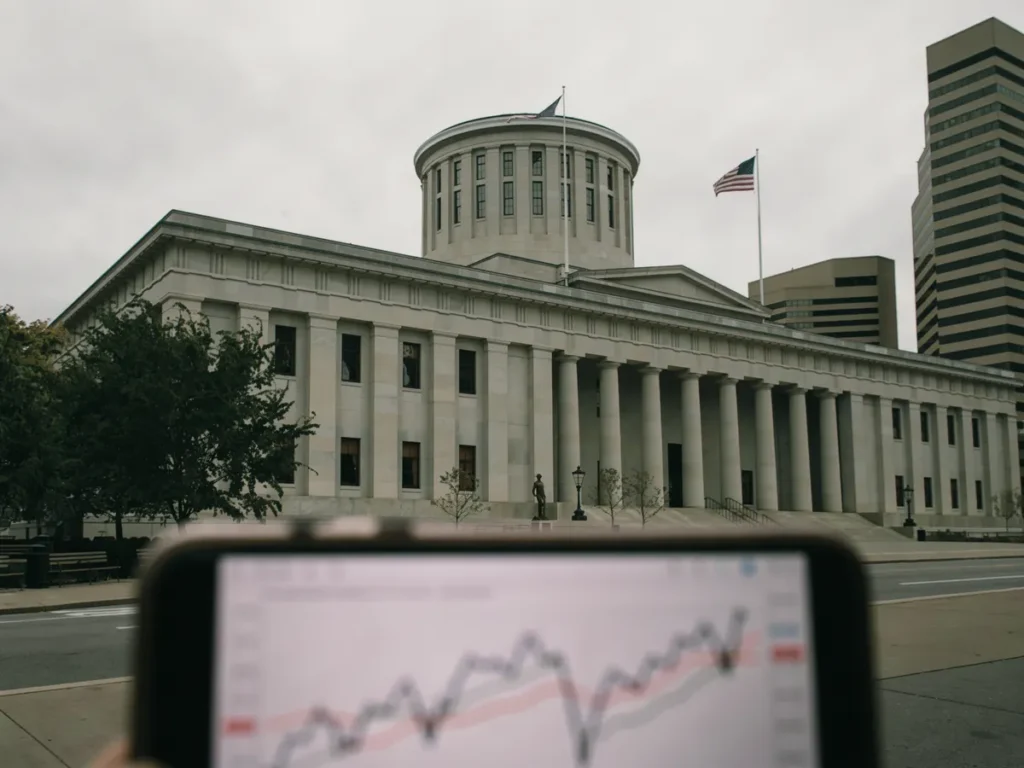
Ohio has made prediction market ties a licensing problem for its own licensees
On October 20, a letter went out from the Ohio Casino Control Commission to the state’s licensed operators and suppliers. It was not addressed to the prediction market companies themselves. Ohio had already sent cease-and-desist letters to 10 of those companies on October 2. This letter went to the people who hold Ohio licenses and do business with them, and it gave them until October 30 to stop serving prediction markets.
That shift is the whole story. Ohio prediction market gaming regulation is no longer only about whether sports event contracts are legal; it is about whether a licensed operator or supplier can keep its license while servicing a company the state considers an illegal operator. Most industry commentary has landed on the right conclusion, that prediction market involvement is now a serious legal risk, but often for the wrong reason. The risk does not depend on any state winning the federal jurisdictional argument. It depends on license conditions that already exist.
What the October 20 letter actually said
The commission told licensed operators and suppliers that involvement in prediction markets could put their licenses at risk, including denial, nonrenewal, suspension or revocation. It said it was “deeply concerned” by reports that some licensees continue to provide services to companies offering sports event contracts in Ohio without a state sports gaming license, and pointed to the continued facilitation or support of illegal gambling activity, and affiliation with illegal operators, as the conduct it is watching.
Two details matter more than the adjectives. First, the warning covers suppliers as well as operators, which pulls platform providers, data feeds, payment partners and marketing affiliates into scope alongside the sportsbooks themselves. Second, it followed the October 2 cease-and-desist letters sent to 10 prediction market companies, so the commission had already made its determination about the underlying products, and it set October 30 as the date by which its own licensees must cut those ties. The licensee letter is the enforcement consequence of a conclusion it reached earlier.
Where FanDuel’s VIP prediction market trial fits, and where it does not
The FanDuel VIP question surfaced in the same news cycle as the Ohio letter, and the two are being read together, but the reporting does not show the commission naming FanDuel in its notice. What is reported is that FanDuel, in its September 24 response to lawmakers, said it does not have a VIP program for FanDuel Predicts, and that the product itself is prediction-market based. Anyone drawing a direct causal line from FanDuel’s prediction market activity to the Ohio letter should verify it against the letter itself.
The fact pattern still matters as an illustration. A licensed sportsbook operator extending a prediction-market feature to its customers is exactly the situation Ohio’s letter describes in the abstract: a license holder with commercial exposure to a product the state says needs a sports gaming license and does not have one. Whether or not any particular feature touches Ohio, it shows why the commission bothered to write.
Why state regulators call event contracts an unlicensed betting product
State gaming regulators apply a substance-over-form test: if a product lets a consumer stake money on a binary sporting outcome and collect a payout when that outcome occurs, they treat it as sports wagering regardless of whether it is described as a contract, a market or a trade. The label on the product does not change what the user is doing with their money.
The CFTC and the states are claiming the same ground
Prediction market operators rely on federal commodities law. Event contracts listed on a designated contract market fall under the Commodity Futures Trading Commission, and the argument is that federal oversight preempts state gambling statutes, which is why these platforms can describe themselves as available nationwide without holding a single state gaming license. State regulators reject the premise as applied to sports outcomes, and Ohio’s position is the blunt version of that rejection: offer sports event contracts here without a state license and you are an illegal operator, whatever your federal registration says.
Neither side has conceded, and the question of whether sports event contracts are lawfully within CFTC jurisdiction is being contested in litigation rather than settled by it. That is precisely why the licensee letter is the more consequential document. A licensee does not need to lose the preemption argument to lose its license. It only needs to be found affiliated with an operator the state has already declared unlicensed, and suitability and affiliation standards are decided by the commission, not a federal court.
Mechanics that resemble a sportsbook
The resemblance regulators point to is structural, not cosmetic. The table below compares the two in the terms a compliance officer would use.
| Element | Licensed sportsbook wager | Sports event contract |
|---|---|---|
| What the user commits | A stake at posted odds | A purchase price per contract, between $0 and $1 |
| Outcome | Stake multiplied by odds, or nothing | Settles at full value, or at zero |
| Implied probability | Derived from the price, plus the operator’s margin | Read directly off the contract price |
| Counterparty | The operator | Other participants on the exchange, plus the clearing structure |
| Claimed oversight | State gaming regulator, under license | CFTC, under federal commodities law |
| State consumer rules | Geofencing, self-exclusion, advertising and responsible gambling conditions apply | Not applied under the federal framing |
That final row is the operative one for regulators. A product that reaches an Ohio consumer on a phone, settles on an Ohio sporting result, and carries none of the state’s self-exclusion or advertising conditions is, from the commission’s seat, the definition of regulatory arbitrage.
What a licensee actually risks
The commission named four consequences: denial, nonrenewal, suspension and revocation of a license. Those are not sequential steps a licensee works through; they are four separate outcomes available to the regulator, and nonrenewal is the quietest and in some ways most dangerous of them, because it requires no finding of wrongdoing at a hearing to end a business in the state.
Monetary penalties are the usual opening move in state gaming enforcement, and reputational exposure follows any public disciplinary docket, which matters disproportionately for multi-state operators whose suitability is reassessed in every jurisdiction they hold a license in. An adverse finding in Ohio becomes a disclosure item in the next renewal application somewhere else. That multiplier effect, rather than any single fine, is the real cost.
This is a developing area and the commission has so far warned rather than acted against licensees, so nothing here should be read as a prediction of what Ohio will do next.
Is this only Ohio?
Ohio is the clearest statement so far, not an outlier. The Massachusetts Gaming Commission issued a letter restricting sports prediction markets in November 2025, and the Nevada Gaming Control Board warned its licensees about sports contracts in October 2025. Every state with a sports gaming license regime already has the two ingredients Ohio used: authority over who may offer sports wagering, and suitability or affiliation standards that reach a licensee’s business relationships. No new statute is needed to send an identical letter.
Which commissions move next is analysis, not fact, though Massachusetts and Nevada have already written to their own licensees. The states most likely to act are those with active cease-and-desist programs against prediction market operators, because the licensee question follows naturally once a state has already labelled a counterparty unlicensed. Ohio simply tied that second step to a hard date.
Risk-management steps while the jurisdiction fight plays out
- Map every commercial relationship touching a prediction market operator, including affiliate marketing, data, payments, platform services and co-branded promotions, not just consumer-facing products.
- Read the affiliation and suitability language in each state license rather than the gambling statute, since that is the clause a commission will cite.
- Check whether any VIP, loyalty or trial feature routes licensed-state customers toward a prediction market product, and whether marketing geofencing matches license geofencing.
- Track the CFTC position and the live litigation as a compliance input, and log the date of each review so a regulator can see the file was current.
- Take written counsel before launching or promoting a prediction-market feature in any state where you hold a license. None of the above is legal advice.
Where this leaves licensees
A licensed operator in Ohio now faces a choice that the federal courts will not make for it. Waiting for the preemption question to resolve is itself a position, and the commission has said what it thinks of licensees who hold that position while continuing to service unlicensed operators. The things worth watching are whether the OCCC escalates from warning to action against a named licensee after its October 30 deadline, whether the CFTC clarifies its treatment of sports event contracts, and how many more commissions follow Massachusetts and Nevada in writing to their own licensees. Until one of those resolves, the safest reading is that the license, not the contract, is the exposed asset.