

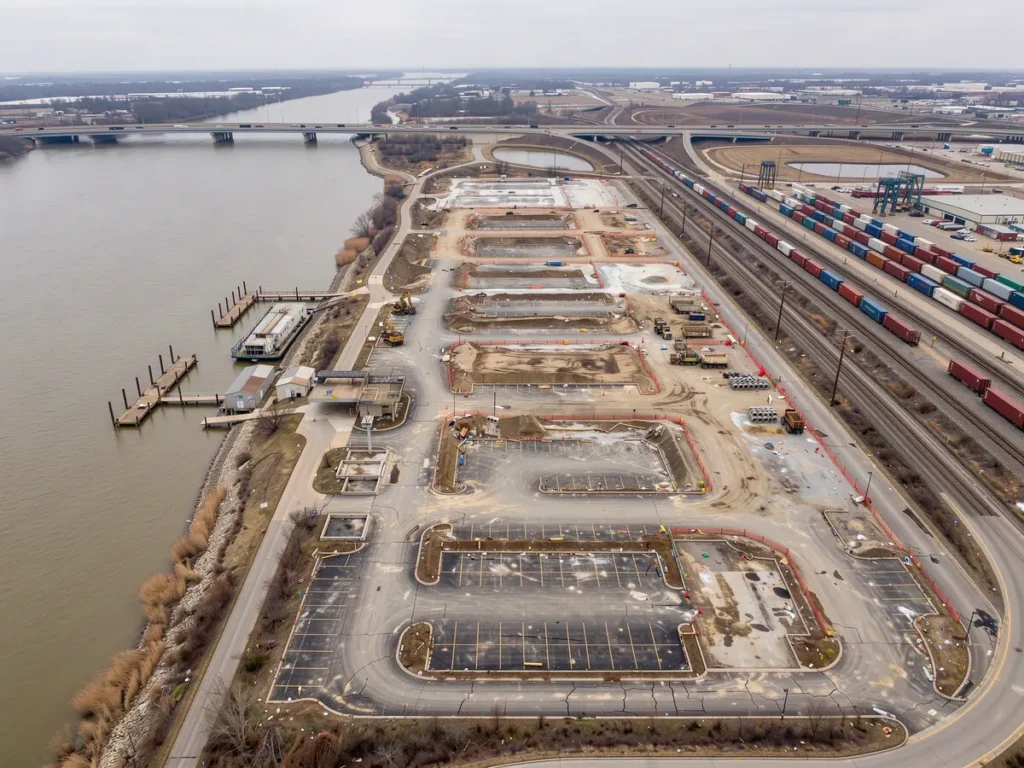
A 262-acre parcel at 777 Hollywood Boulevard in Joliet, Illinois is about to stop being casino land. Gaming and Leisure Properties (NASDAQ: GLPI) said on October 28, 2026 that it is entering a joint venture with Prologis (NYSE: PLD) to redevelop the former Hollywood Casino Joliet site into a distribution and warehouse hub, according to reporting from Casino.org. It is GLPI’s first joint venture and its first transaction outside gaming, which is why the deal is being read as the opening move in casino REIT diversification rather than a routine land disposal.
That reading is half right. The label has genuinely changed. The business has barely moved, and the structure of the deal tells you why.
What GLPI and Prologis actually agreed
GLPI will contribute the Joliet parcel to the joint venture in three phases, with Prologis acting as managing member and developer, per the company statement quoted in the reporting. Prologis, the largest industrial real estate company in the world, plans to develop the site over five years and holds options over the development of phases two and three. Financial terms were not disclosed.
Note what is absent from that sentence: a sale price, a cap rate, a rent figure, and any commitment from Prologis beyond phase one. The industrial partner took options. GLPI took exposure to a development it does not manage.
| Deal element | As reported |
|---|---|
| Parties | Gaming and Leisure Properties and Prologis |
| Asset | 262-acre parcel, 777 Hollywood Boulevard, Joliet, Illinois |
| Planned use | Distribution and warehouse hub |
| Structure | Joint venture; GLPI contributes land in three phases |
| Developer | Prologis, as managing member, with options over phases two and three |
| Timeline | Development over five years |
| Financial terms | Not disclosed |
Why 777 Hollywood Boulevard was empty in the first place
The site came free because Penn Entertainment (NASDAQ: PENN) moved its Joliet casino rather than closed it. Penn opened the relocated Hollywood Casino Joliet in August 2025 after investing $185 million in the new venue, whose real estate GLPI also owns. Wall Street has treated the relocation as a success, per the same reporting. GLPI had held the original site since 2013, when it was spun off from Penn with the operator’s property portfolio.
Cushman & Wakefield, which listed the vacated parcel, said GLPI preferred a long-term ground lease or a joint venture to an outright sale. The brokerage’s marketing material described a site already annexed, with most parcels carrying I-2 industrial zoning, sitting next to the BNSF and Union Pacific intermodals and close to both I-80 and I-55. The casino building itself is an obstacle rather than an asset: Prologis will likely have to demolish it.
Read that list again and the deal looks less like strategy and more like geography. Nothing about the parcel’s appeal to Prologis has anything to do with gambling. It is industrial-zoned acreage in one of the densest logistics corridors in the United States, which happened to have a riverboat casino parked on it for three decades.
Why this counts as a first for Gaming and Leisure Properties
GLPI’s model until now has been singular: own the dirt and the buildings, lease them to licensed gaming operators, collect rent. The company leases 71 gaming venues across 21 states, and Penn plus Bally’s (NYSE: BALY), which the reporting describes as cash-strapped, account for 50 of them. Every dollar of that rent depends on regional casino operators staying solvent and licensed.
The reporting frames the Prologis deal as GLPI taking a page from the playbook of its primary rival, VICI Properties (NYSE: VICI), and notes that while GLPI is not currently having trouble collecting rent, investors are increasingly prioritising deal and tenant diversification among listed gaming REITs. That is the honest version of the rationale: this is a response to how the equity market prices concentration risk, not evidence that the concentration has started to hurt.
How gaming REITs make money, briefly
A gaming REIT is a landlord, not a casino company. It owns the land and buildings and leases them to an operator under a triple-net lease, meaning the tenant pays rent plus property taxes, insurance and maintenance. The operator holds the gaming licence, runs the floor, keeps the gaming revenue and carries the trading risk; the REIT collects contracted rent, typically with fixed or inflation-linked escalators, over leases that run for decades.
That structure is why the word “non-gaming” matters here. The REIT’s cash flow has never depended on slot handle or table drop directly, only on a casino tenant’s ability to pay. Swap the tenant for a warehouse developer and the mechanics of the rent change very little. What changes is the pool of things that could go wrong.
The condition most of the coverage skips
Concentration in a gaming REIT is a tenant problem before it is an asset-class problem, and the Joliet joint venture does nothing about the tenant problem. Two operators still sit behind 50 of 71 leased venues. Contributing one vacant parcel into a warehouse development, in phases, on undisclosed terms, does not rebalance that. If Bally’s rent coverage deteriorates, a distribution hub in Will County will not be the reason GLPI’s share price holds up.
So here is what I would not do with this announcement: treat it as the start of a non-gaming acquisition programme. GLPI did not go out and buy industrial property. It found a buyer-partner for land it was already stuck with after its own tenant moved across town, and it chose a joint venture over a sale precisely so it could keep the long-term economics. That is competent asset management. It is not a change of model, and the phased contribution with Prologis holding options on two of the three phases is the clearest evidence that GLPI is keeping its commitment small while it learns what non-gaming development actually feels like.
The genuine signal is narrower and more interesting: GLPI has now demonstrated that a vacated casino footprint can be recycled through a partner rather than dumped at a discount. For a landlord whose tenants keep relocating riverboats to landside properties, that is a useful capability to have proved once.
What would make this a template rather than a one-off
The terms are the first unresolved question. Nothing was disclosed about valuation, GLPI’s share of the venture, or how rent or development profit flows back to it, so there is no way yet to judge whether the REIT monetised the acreage well. The second is the option structure. Prologis committing to phases two and three would confirm demand for the full 262 acres; letting those options lapse would leave GLPI holding undeveloped land through the back half of a five-year programme.
The third, and the one that decides whether casino property redevelopment becomes a line of business for gaming REITs, is what GLPI does next. Another phased contribution of surplus land after a tenant relocation is just housekeeping. A non-gaming deal involving property GLPI goes out and acquires would mean the model has actually changed. Until that happens, the pivot is one parcel wide.